 Promotion: 5% Discount Code: 5vip





Beginner Locksport Training: Setting Up a Safe Practice Workspace
2026-10-27 10:49
Locksport is a hands-on hobby that combines mechanical curiosity, patience, and problem-solving. Beginners can learn how pin tumbler locks work, understand the relationship between keys and internal components, and develop fine motor control through structured practice. Before choosing tools or attempting exercises, however, it is important to create a workspace that supports safe, organized, and responsible learning.
A well-prepared practice area does not need to be expensive or complicated. With a stable work surface, suitable training locks, basic protective equipment, and clear safety rules, beginners can build a consistent learning routine without unnecessary risks. Exploring Cheap Lock Pick Sets at Barhomevip can help new enthusiasts compare available options and find tools that fit their training needs and budget. Before making a purchase, check the product specifications and ensure the tools are suitable for lawful locksport practice.
Look for a location with the following characteristics:
Transparent locks are useful for visual learning, although their simplified construction may not behave exactly like ordinary locks. A conventional training lock can provide a more realistic experience once the basic components are familiar.
Only practice on locks you own or have explicit permission to use. Never experiment on locks protecting another person's property, active security systems, or doors that people may need to access.
Your basic setup may include:
Keep sharp or pointed tools secured when they are not in use. Do not leave equipment where children, pets, or other household members could accidentally reach it.
Follow these fundamental rules:
The goal of a training workspace is to support controlled experimentation, not to bypass real-world security.
Position your training lock at a height that allows you to work without leaning forward excessively. Place frequently used items within easy reach, and keep unused tools outside your immediate working area.
Consider these simple improvements:
A simple 30-minute session might look like this:
Adjust the schedule according to your experience. Early sessions should focus on recognizing components and understanding how a lock operates instead of achieving a particular result quickly.
Keep notes about what you observed, which concepts remain confusing, and what you want to study next. These records can help you recognize progress over time.
After each session, return tools to their storage case, collect loose components, and inspect the training lock for visible damage. Keep equipment dry and follow the manufacturer's recommendations for cleaning and maintenance.
Periodically review your setup to identify unnecessary clutter or missing supplies. If you acquire additional training locks, label them according to their type or difficulty so you can choose an appropriate exercise.
It is also useful to review your learning notes before starting a new session. Revisiting previous observations helps reinforce mechanical concepts and makes it easier to identify areas that need further study.
Focus on understanding how locks work, practicing only with authorized training equipment, and improving gradually through structured sessions. With a comfortable environment and responsible habits, locksport can become a rewarding hobby built around curiosity, precision, and respect for security.
Once your workspace is ready, choosing the right training equipment is the next step. If you want to put your knowledge into practice, Buy Practice Locks from Barhomevip to explore suitable options for beginner training. Start with locks designed for educational use, build your skills gradually, and keep every practice session safe, organized, and focused on locks you own or are authorized to use.
A well-prepared practice area does not need to be expensive or complicated. With a stable work surface, suitable training locks, basic protective equipment, and clear safety rules, beginners can build a consistent learning routine without unnecessary risks. Exploring Cheap Lock Pick Sets at Barhomevip can help new enthusiasts compare available options and find tools that fit their training needs and budget. Before making a purchase, check the product specifications and ensure the tools are suitable for lawful locksport practice.
Choose the Right Location for Practice
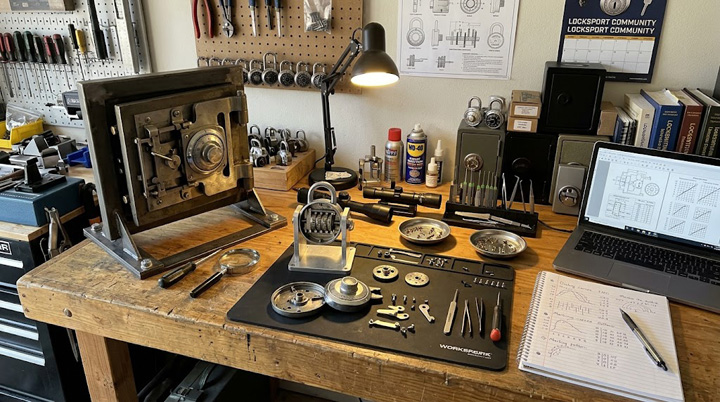
The first step is finding a dedicated area where you can concentrate without distractions. A desk, workbench, or sturdy table is usually sufficient for beginner locksport training.Look for a location with the following characteristics:
- Stable work surface: Choose a table that does not wobble when you handle small tools or adjust a training lock.
- Good lighting: Use a desk lamp or adjustable task light to make small lock components easier to see.
- Comfortable seating: Keep your back supported and your shoulders relaxed during practice sessions.
- Adequate space: Leave enough room for the lock, tools, reference materials, and a container for small components.
- Low-distraction environment: Keep unrelated devices and clutter away from your immediate work area.
Start With Appropriate Training Locks
Choosing the right practice lock is more important than buying a large collection of equipment. Beginners should start with inexpensive training devices designed specifically for educational use.| Training Equipment | Main Purpose | Beginner Benefit |
| Transparent practice lock | Observe internal components | Helps explain how the mechanism operates |
| Cutaway training lock | View selected internal sections | Connects mechanical theory with real components |
| Practice padlock | Become familiar with a conventional lock body | Provides a practical, reusable training object |
| Practice cylinder | Study a common cylinder-based mechanism | Introduces basic lock construction |
| Spare key-operated lock | Compare different mechanical designs | Encourages observation and mechanical understanding |
Only practice on locks you own or have explicit permission to use. Never experiment on locks protecting another person's property, active security systems, or doors that people may need to access.
Organize Your Tools and Supplies
A clean, organized workspace makes it easier to focus on learning rather than searching for equipment. Start with a small collection of tools intended for lawful training.Your basic setup may include:
- A beginner locksport practice kit from a reputable supplier.
- A dedicated storage case for tools.
- A small tray to prevent loose components from rolling off the desk.
- A notebook for recording observations and progress.
- A magnifying glass for examining small mechanical parts.
- A soft cloth for cleaning the work surface and equipment.
- A small parts container for removable training components.
Keep sharp or pointed tools secured when they are not in use. Do not leave equipment where children, pets, or other household members could accidentally reach it.
Establish Essential Safety Rules
Although locksport is primarily a mechanical hobby, safe habits should be part of every practice session.Follow these fundamental rules:
- Practice only with locks you own or are authorized to work on.
- Use training locks that are disconnected from doors, gates, vehicles, or other operational security systems.
- Inspect tools before use and stop if a tool is bent, damaged, or unstable.
- Keep fingers clear of pinch points and avoid applying excessive force to mechanical components.
- Never use improvised methods that could damage equipment or cause injury.
- Keep small components away from children and pets.
- Store tools securely after finishing each session.
The goal of a training workspace is to support controlled experimentation, not to bypass real-world security.
Prepare a Comfortable and Efficient Workstation
Ergonomics can make a noticeable difference when practicing a hobby that requires concentration and precise hand movements.Position your training lock at a height that allows you to work without leaning forward excessively. Place frequently used items within easy reach, and keep unused tools outside your immediate working area.
Consider these simple improvements:
- Lighting: Position your lamp so that your hands do not cast strong shadows over the training lock.
- Tool placement: Arrange equipment consistently so that you can identify and retrieve each item without interrupting your concentration.
- Visual references: Keep a diagram of the lock's components nearby. Labels and illustrations can help you understand the relationship between the housing, plug, pins, springs, and keyway.
- Breaks: Take short breaks when your hands become tired or your concentration decreases. Fatigue can lead to careless handling and unnecessary force.
Create a Structured Beginner Training Routine
Once your workspace is ready, develop a routine that emphasizes understanding rather than speed.A simple 30-minute session might look like this:
| Time | Activity | Learning Objective |
| 5 minutes | Inspect the training lock | Identify visible components and their functions |
| 10 minutes | Study a transparent or cutaway model | Understand the basic mechanical arrangement |
| 10 minutes | Complete a beginner exercise using an authorized practice lock | Develop patience and controlled tool handling |
| 5 minutes | Record observations and organize equipment | Reinforce learning and maintain a safe workspace |
Keep notes about what you observed, which concepts remain confusing, and what you want to study next. These records can help you recognize progress over time.
Maintain Your Workspace Between Sessions
Regular maintenance protects your equipment and keeps practice sessions productive.After each session, return tools to their storage case, collect loose components, and inspect the training lock for visible damage. Keep equipment dry and follow the manufacturer's recommendations for cleaning and maintenance.
Periodically review your setup to identify unnecessary clutter or missing supplies. If you acquire additional training locks, label them according to their type or difficulty so you can choose an appropriate exercise.
It is also useful to review your learning notes before starting a new session. Revisiting previous observations helps reinforce mechanical concepts and makes it easier to identify areas that need further study.
Conclusion
A safe locksport workspace provides the foundation for learning mechanical principles, developing patience, and building practical skills. Beginners do not need an elaborate workshop. A stable desk, good lighting, purpose-built training locks, organized tools, and consistent safety practices are enough to get started.Focus on understanding how locks work, practicing only with authorized training equipment, and improving gradually through structured sessions. With a comfortable environment and responsible habits, locksport can become a rewarding hobby built around curiosity, precision, and respect for security.
Once your workspace is ready, choosing the right training equipment is the next step. If you want to put your knowledge into practice, Buy Practice Locks from Barhomevip to explore suitable options for beginner training. Start with locks designed for educational use, build your skills gradually, and keep every practice session safe, organized, and focused on locks you own or are authorized to use.