 Promotion: 5% Discount Code: 5vip





How to Build a Lock Picking Practice Kit on a Budget
2026-10-20 11:00
Learning lock picking can be an interesting way to explore mechanical security, understand how locks work, and develop patience and fine motor skills. However, getting started does not require an expensive professional toolkit. Beginners can start with affordable equipment and Cheap Practice Locks to keep initial costs low while learning the basics of lock mechanisms.
The key is to focus on essential equipment, choose beginner-friendly practice locks, and avoid buying tools that you may not need. This guide explains how to assemble a budget-friendly kit, compares typical equipment costs, and shares practical tips for getting the most value from your purchase.
For most beginners, a simple kit should include:
Here are three common options:
Prices are illustrative estimates in USD and vary by seller, material, and location.
A transparent lock is often the easiest starting point because you can observe how its components move. However, some inexpensive models are poorly made or behave differently from conventional locks.
A cutaway model offers a useful balance between visibility and mechanical realism. A standard practice padlock can be a sensible next purchase once you understand the basic mechanism.
Budget tip: Begin with one training lock instead of buying several. Look for clear product descriptions, material information, and reviews that mention durability and functional movement.
Only practice on locks you own or have explicit permission to use.
When comparing beginner kits, consider the following:
For a budget-conscious beginner, an entry-level training set in the $10–$25 range may be sufficient. More expensive equipment is worth considering only when you understand what additional features you need.
These figures are illustrative, not live product quotations. Shipping fees and local taxes may increase the final cost.
You can reduce expenses further by using items you already own. A desk lamp, a clean work surface, and a small box for organizing equipment are usually sufficient. There is no need to purchase specialized furniture or expensive accessories for basic practice.
If your budget is especially limited, prioritize the practice lock and a compatible beginner set. Add storage accessories later if necessary.
You can create a simple setup with household items:
For example, a 20-minute session could be organized as follows:
These activities focus on understanding the mechanism rather than rushing to achieve a particular result.
As your familiarity grows, you can compare different training locks, study their construction, and learn about the design features that influence security.
Keep brief notes about what you observe. Recording questions and discoveries helps you identify gaps in your understanding without buying additional tools unnecessarily.
Watch out for these common mistakes:
Possible upgrades include:
A basic kit can cost approximately $20–$40 before shipping and taxes, depending on the quality of the lock and tools you select.
Q2: Is a transparent practice lock worth buying?
Yes. It can help beginners visualize internal components and understand the basic principles of a pin-tumbler mechanism. However, it may not perfectly reproduce the behavior of an ordinary lock.
Q3: Do I need professional locksmith tools?
No. A small beginner training set is generally enough to explore basic mechanisms. Professional equipment is unnecessary for most introductory learning activities.
Q4: Can I make a practice kit entirely from household items?
You can improvise a workspace and storage system using household items, but a purpose-built training lock and compatible tools provide a more suitable foundation for mechanical practice.
Q5: Is lock picking legal?
Laws vary by location. Possessing training tools, carrying them in public, and using them on locks may be treated differently under local regulations. Check the rules that apply to you and practice only on locks you own or are explicitly authorized to use.
Building a lock picking practice kit on a budget is mainly about choosing the right essentials rather than purchasing the largest collection of tools. Start with a basic training lock, a suitable set of tools, and an organized workspace, then upgrade as your experience grows.
When you are ready to expand your equipment, comparing available options can help you decide where to Buy Lock Pick Sets that suit your learning needs and budget. By focusing on practicality and quality, you can build a useful training setup without unnecessary spending.
The key is to focus on essential equipment, choose beginner-friendly practice locks, and avoid buying tools that you may not need. This guide explains how to assemble a budget-friendly kit, compares typical equipment costs, and shares practical tips for getting the most value from your purchase.
1. Decide What You Need Before Buying
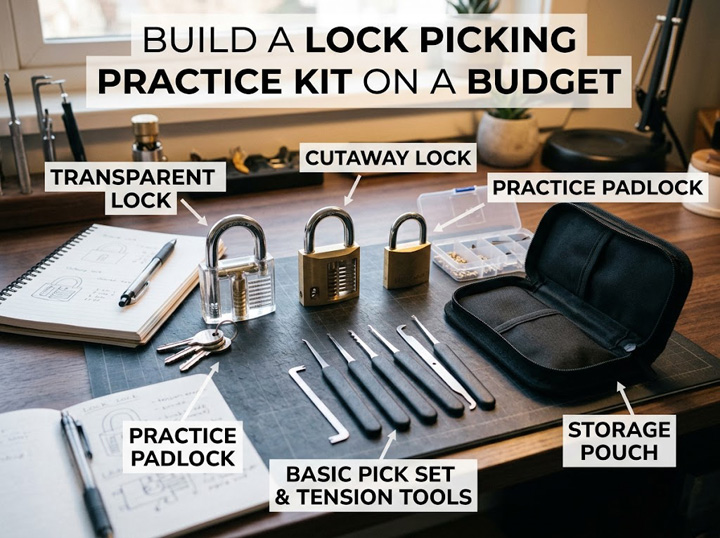
Before shopping for tools, determine what you want to learn. A beginner who wants to understand basic pin-tumbler mechanisms needs a different setup from someone who already has experience with several lock types.For most beginners, a simple kit should include:
- A practice lock designed for training.
- A small set of basic lock picks.
- A tension wrench or turning tool compatible with the practice lock.
- A stable surface and adequate lighting.
- A storage pouch to keep everything organized.
2. Choose an Affordable Practice Lock
The practice lock is the foundation of your kit. Choosing the right one can make the learning process more accessible and help you understand the internal components of a lock.Here are three common options:
| Practice lock type | Typical budget | Main advantage | Best for |
| Transparent training lock | $5–$15 | Internal components are visible | Absolute beginners |
| Basic cutaway lock | $10–$25 | Shows part of the internal mechanism | Understanding lock construction |
| Standard practice padlock | $8–$20 | More closely resembles an ordinary lock | Developing familiarity with real mechanisms |
A transparent lock is often the easiest starting point because you can observe how its components move. However, some inexpensive models are poorly made or behave differently from conventional locks.
A cutaway model offers a useful balance between visibility and mechanical realism. A standard practice padlock can be a sensible next purchase once you understand the basic mechanism.
Budget tip: Begin with one training lock instead of buying several. Look for clear product descriptions, material information, and reviews that mention durability and functional movement.
Only practice on locks you own or have explicit permission to use.
3. Buy a Basic Lock Pick Set
You do not need dozens of tools to start learning. A small, well-made set is generally more useful than a large collection of low-quality picks.When comparing beginner kits, consider the following:
- Material: Stainless steel tools are common and generally resistant to corrosion.
- Handle comfort: Smooth, comfortable handles can make practice sessions easier on your fingers.
- Tool selection: Look for a modest selection of common training tools and compatible tension wrenches.
- Build quality: Check whether the tools have smooth edges and consistent construction.
- Storage: A simple pouch protects the tools and prevents them from getting lost.
For a budget-conscious beginner, an entry-level training set in the $10–$25 range may be sufficient. More expensive equipment is worth considering only when you understand what additional features you need.
4. Set a Realistic Budget
A useful practice kit can be assembled without spending much money. The following example shows how costs might add up.| Item | Estimated cost |
| Transparent training lock | $8 |
| Basic beginner pick set | $15 |
| Small storage pouch | $3 |
| Desk lamp or existing light source | $0–$8 |
| Small parts container | $2 |
| Estimated total | $28–$36 |
You can reduce expenses further by using items you already own. A desk lamp, a clean work surface, and a small box for organizing equipment are usually sufficient. There is no need to purchase specialized furniture or expensive accessories for basic practice.
If your budget is especially limited, prioritize the practice lock and a compatible beginner set. Add storage accessories later if necessary.
5. Build a Comfortable Practice Space
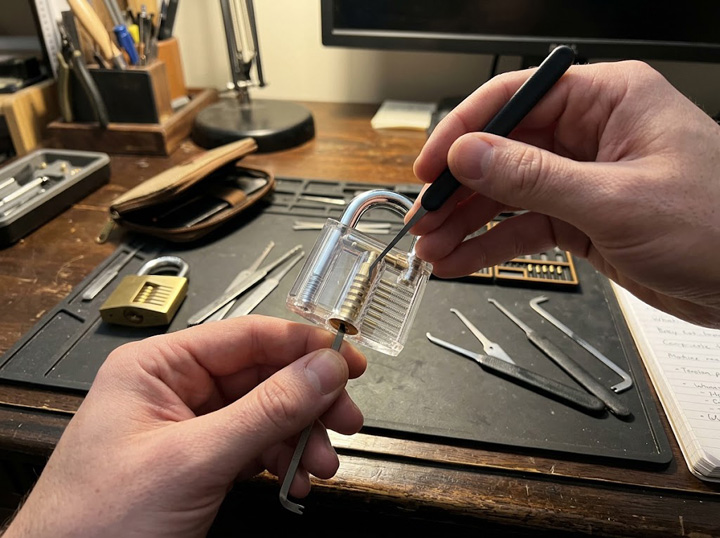
A suitable workspace makes learning easier and helps prevent small tools from getting lost.You can create a simple setup with household items:
- Choose a stable desk. A flat surface makes it easier to handle small components.
- Use adequate lighting. Position a desk lamp so you can see the lock clearly without creating harsh glare.
- Organize your tools. Keep picks, tension tools, and accessories in separate sections of a pouch or container.
- Protect the surface. Place a small mat or folded cloth underneath the practice lock to prevent scratches.
- Keep small components contained. If you use a training lock with removable parts, work over a tray to reduce the risk of losing them.
6. Learn Through Structured Practice
Once your kit is ready, establish a simple routine instead of immediately purchasing more equipment.For example, a 20-minute session could be organized as follows:
| Time | Activity | Goal |
| 5 minutes | Inspect the practice lock | Identify its visible components |
| 5 minutes | Review how the mechanism operates | Understand the basic principles |
| 5 minutes | Handle training tools carefully | Improve control and familiarity |
| 5 minutes | Record observations | Track progress and questions |
As your familiarity grows, you can compare different training locks, study their construction, and learn about the design features that influence security.
Keep brief notes about what you observe. Recording questions and discoveries helps you identify gaps in your understanding without buying additional tools unnecessarily.
7. Common Budget Mistakes to Avoid
A low-cost kit can still become expensive if you purchase unnecessary accessories or replace poorly made equipment repeatedly.Watch out for these common mistakes:
- Buying oversized kits: Many beginners will not need every tool included in a large set.
- Ignoring quality: Extremely cheap tools may have rough edges, weak handles, or inconsistent dimensions.
- Buying too many locks: Start with one reliable training lock and expand gradually.
- Overlooking shipping fees: A low advertised price may not represent the final cost.
- Choosing appearance over function: Attractive packaging does not guarantee good manufacturing quality.
- Skipping legal considerations: Check local laws and use your equipment only for authorized training.
8. When Should You Upgrade Your Kit?
You do not need to upgrade simply because more advanced equipment is available. Consider expanding your collection when your current setup no longer supports your learning goals.Possible upgrades include:
- A higher-quality cutaway training lock.
- A second practice lock with a different internal configuration.
- More durable tools with comfortable handles.
- A dedicated organizer for keeping equipment in good condition.
- Educational resources explaining lock construction and mechanical security.
Frequently Asked Questions
Q1: How much does a beginner lock picking practice kit cost?A basic kit can cost approximately $20–$40 before shipping and taxes, depending on the quality of the lock and tools you select.
Q2: Is a transparent practice lock worth buying?
Yes. It can help beginners visualize internal components and understand the basic principles of a pin-tumbler mechanism. However, it may not perfectly reproduce the behavior of an ordinary lock.
Q3: Do I need professional locksmith tools?
No. A small beginner training set is generally enough to explore basic mechanisms. Professional equipment is unnecessary for most introductory learning activities.
Q4: Can I make a practice kit entirely from household items?
You can improvise a workspace and storage system using household items, but a purpose-built training lock and compatible tools provide a more suitable foundation for mechanical practice.
Q5: Is lock picking legal?
Laws vary by location. Possessing training tools, carrying them in public, and using them on locks may be treated differently under local regulations. Check the rules that apply to you and practice only on locks you own or are explicitly authorized to use.
Conclusion
Building a lock picking practice kit on a budget is mainly about choosing the right essentials rather than purchasing the largest collection of tools. Start with a basic training lock, a suitable set of tools, and an organized workspace, then upgrade as your experience grows. When you are ready to expand your equipment, comparing available options can help you decide where to Buy Lock Pick Sets that suit your learning needs and budget. By focusing on practicality and quality, you can build a useful training setup without unnecessary spending.