 Promotion: 5% Discount Code: 5vip





Lock Pick Tension Tools Guide: TOK vs BOK and How to Choose the Right Tension Wrench
2026-08-18 11:45
A lock pick may receive most of the attention in a lock-picking set, but it cannot work effectively without a suitable tension tool. The tension wrench, also called a tensioner, torque wrench, or turning tool, applies controlled rotational pressure to the lock plug while the pick interacts with the internal components.
Learning to manage tension is often more difficult than choosing a hook or rake. Too much pressure can restrict movement inside the lock, while too little may prevent meaningful feedback. The size, shape, thickness, and placement of the tension tool can all influence control. Beginners looking to Buy Lock Pick Sets can visit Barhomevip.com to explore practical kits containing different pick profiles, tension wrenches, and training accessories for authorized lock-picking practice.
Two of the most common approaches are Top of the Keyway (TOK) and Bottom of the Keyway (BOK) tensioning. Understanding how they differ can help beginners build better practice habits and choose a more useful lock pick set.
Lock-picking tools should only be used on locks you own or have explicit permission to service. Local laws concerning the purchase, possession, carrying, and use of these tools vary, so users should check the applicable regulations before purchasing or using them.
During authorized practice, the tension tool performs several important functions:
TOK tensioners are often flat, rigid tools with a short end designed to rest securely near the top of the plug. They are commonly called pry bars because of their straight shape, although they should not be used to pry anything.
One important advantage of TOK tensioning is that it leaves more of the lower keyway available for the pick. This can be useful when the keyway is narrow, curved, or heavily restricted. It may also provide clear plug feedback because the tool fits firmly against the upper edge.
TOK tensioning may be suitable when:
Many traditional tension wrenches use this arrangement. They are commonly made from thin spring steel and may have an L-shaped, twisted, or double-ended design. BOK tools are frequently included in beginner lock pick sets because they are inexpensive, versatile, and compatible with many standard practice locks.
BOK tensioning may be useful when:
Neither method is automatically better. The correct option depends on the lock, keyway, tool dimensions, pick profile, and the user’s preferred feedback.
L-Shaped Tension Wrench
This simple design has a short end and a long handle. Different ends may provide different lengths or widths. It is commonly used for BOK tensioning and is often included in beginner kits.
Twisted Tension Wrench
The shaft is twisted to create a broader surface for the fingers. Some users find it comfortable, although the additional flexibility can make subtle feedback less direct.
Flat TOK Pry Bar
A flat pry-bar-style tensioner is designed for TOK placement. These tools are frequently sold in several thicknesses to accommodate different keyways.
Double-Ended Tension Tool
A double-ended tool provides two working ends, which may differ in width, angle, or length. This design increases versatility without taking up much space in a toolkit.
Feather-Touch or Flexible Tensioner
A thinner, more flexible wrench can help users recognise small changes in pressure. However, thin tools may bend more easily and can feel unstable in a wide keyway.
Consider the following factors:
A balanced starter set could include:
Recommended maintenance steps include:
TOK tensioning becomes particularly valuable when working space is limited or when a firmer connection to the plug is preferred. Learning both approaches provides greater flexibility because a lock that feels awkward with one placement may offer better control with the other.
The most practical answer is therefore not to choose TOK or BOK exclusively. A useful lock pick kit should contain multiple tension tools in different dimensions. With authorized practice, users can compare how each one fits and learn which type produces the clearest, most controlled feedback.
When choosing a tension wrench, focus on secure fit, usable pick space, appropriate rigidity, and controlled handling. Avoid forcing a tool that is too large or relying on a loose tensioner that repeatedly slips.
For most beginners, the best solution is a compact assortment containing both TOK and BOK tension tools. Barhomevip.com offers Cheap Lock Picking Tools for sale, making it easier to compare lock pick sets with different tensioner sizes, tool profiles, and included accessories. Choose a kit that matches your experience level, and use every tool only on legally owned locks or locks you have explicit permission to service.
Learning to manage tension is often more difficult than choosing a hook or rake. Too much pressure can restrict movement inside the lock, while too little may prevent meaningful feedback. The size, shape, thickness, and placement of the tension tool can all influence control. Beginners looking to Buy Lock Pick Sets can visit Barhomevip.com to explore practical kits containing different pick profiles, tension wrenches, and training accessories for authorized lock-picking practice.
Two of the most common approaches are Top of the Keyway (TOK) and Bottom of the Keyway (BOK) tensioning. Understanding how they differ can help beginners build better practice habits and choose a more useful lock pick set.
Lock-picking tools should only be used on locks you own or have explicit permission to service. Local laws concerning the purchase, possession, carrying, and use of these tools vary, so users should check the applicable regulations before purchasing or using them.
What Is a Lock Pick Tension Tool?
A tension wrench is a small metal tool inserted into the keyway to apply rotational force to the plug. It does not normally manipulate the pins or other locking components directly. Instead, it creates the controlled pressure required for a pick to produce useful feedback.During authorized practice, the tension tool performs several important functions:
- Applies rotational pressure in the direction the plug is designed to turn
- Helps create feedback as internal components are tested
- Allows the user to feel changes in plug movement
- Keeps components in position as progress is made
- Provides the turning force needed once the lock has been correctly manipulated
What Does TOK Mean?
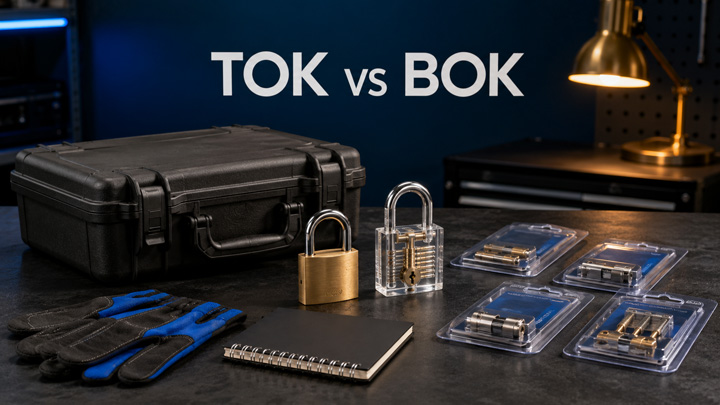
TOK stands for Top of the Keyway. In this arrangement, the tension tool is positioned at the upper edge of the keyway.TOK tensioners are often flat, rigid tools with a short end designed to rest securely near the top of the plug. They are commonly called pry bars because of their straight shape, although they should not be used to pry anything.
One important advantage of TOK tensioning is that it leaves more of the lower keyway available for the pick. This can be useful when the keyway is narrow, curved, or heavily restricted. It may also provide clear plug feedback because the tool fits firmly against the upper edge.
TOK tensioning may be suitable when:
- A BOK tool occupies too much working space
- The keyway has limited room near the bottom
- A larger hook needs additional clearance
- The user wants a more direct or rigid response
- The lock accepts a flat TOK tensioner securely
What Does BOK Mean?
BOK stands for Bottom of the Keyway. A BOK tension wrench rests along the lower section of the keyway.Many traditional tension wrenches use this arrangement. They are commonly made from thin spring steel and may have an L-shaped, twisted, or double-ended design. BOK tools are frequently included in beginner lock pick sets because they are inexpensive, versatile, and compatible with many standard practice locks.
BOK tensioning may be useful when:
- The bottom of the keyway provides a stable resting point
- The keyway is wide enough for both the tensioner and pick
- The user prefers a flexible tool with softer feedback
- The lock does not hold a TOK tensioner securely
- A beginner is practising with a basic pin-tumbler training lock
TOK vs BOK Tension Tools
| Feature | TOK Tensioning | BOK Tensioning |
| Full name | Top of the Keyway | Bottom of the Keyway |
| Tool position | Upper edge of the keyway | Lower section of the keyway |
| Common design | Flat, rigid pry-bar style | L-shaped, twisted or double-ended |
| Working space | Usually leaves more lower-keyway space | May reduce space available for the pick |
| Feedback | Often direct and firm | Often softer and more flexible |
| Stability | Stable when the thickness fits correctly | Stable in many open or standard keyways |
| Beginner accessibility | May require several sizes | Commonly included in starter sets |
| Best general use | Restricted keyways and additional pick clearance | Basic training locks and wider keyways |
| Common issue | Can slip if it is too thin | Can bind or block the keyway if too large |
Common Types of Tension Wrenches
A complete set may contain several tension-tool designs rather than one universal wrench.L-Shaped Tension Wrench
This simple design has a short end and a long handle. Different ends may provide different lengths or widths. It is commonly used for BOK tensioning and is often included in beginner kits.
Twisted Tension Wrench
The shaft is twisted to create a broader surface for the fingers. Some users find it comfortable, although the additional flexibility can make subtle feedback less direct.
Flat TOK Pry Bar
A flat pry-bar-style tensioner is designed for TOK placement. These tools are frequently sold in several thicknesses to accommodate different keyways.
Double-Ended Tension Tool
A double-ended tool provides two working ends, which may differ in width, angle, or length. This design increases versatility without taking up much space in a toolkit.
Feather-Touch or Flexible Tensioner
A thinner, more flexible wrench can help users recognise small changes in pressure. However, thin tools may bend more easily and can feel unstable in a wide keyway.
How to Choose the Right Tension Wrench
Instead of choosing a tension tool based only on appearance, evaluate how it fits the particular training lock.Consider the following factors:
- Keyway width: The tool should fit securely without forcing its way into the opening.
- Keyway shape: Curved or restrictive keyways may require a thinner tensioner or TOK placement.
- Available working space: The wrench should leave enough room for the selected pick to move comfortably.
- Tool thickness: A tool that is too thin may slip, while an oversized one may bind the plug or block the keyway.
- Rigidity: Rigid tools provide direct feedback, while flexible tools may make pressure easier to moderate.
- Handle length: Longer tools can provide leverage but may encourage excessive pressure. Shorter tools are compact but may offer less finger space.
- Tool material: Quality spring steel generally offers a useful balance of strength, flexibility, and durability.
- Intended practice level: Beginners often benefit from several basic BOK tools and a small selection of TOK tensioners rather than a large number of unusual designs.
Essential Tension Tools for a Beginner Set
A practical beginner collection does not need dozens of tension wrenches. A small assortment of well-chosen sizes is usually more useful.A balanced starter set could include:
- Two or three BOK tension wrenches in different widths
- One standard L-shaped wrench
- One twisted or double-ended tensioner
- Two or three flat TOK tools in different thicknesses
- A storage case that prevents tools from bending
- A transparent, cutaway, or other authorized practice lock
Common Tensioning Mistakes
Many early problems are caused by the tension tool rather than the pick. Common mistakes include:- Applying excessive rotational pressure
- Using a wrench that is too wide for the keyway
- Selecting a thin tool that repeatedly slips
- Inserting the wrench so deeply that it touches another surface
- Blocking the pick’s movement with an oversized BOK tool
- Holding the handle too tightly
- Changing pressure constantly without observing the feedback
- Using a bent, cracked, or damaged tensioner
- Assuming the same tool will fit every lock
- Continuing when the tool or lock shows signs of damage
How to Care for Tension Wrenches
Tension tools are durable, but they still require basic maintenance. Proper care helps preserve their shape and prevents rough surfaces from affecting practice.Recommended maintenance steps include:
- Wipe tools after use to remove moisture and skin oils
- Store them in a dry case or tool roll
- Check regularly for rust, cracks, sharp edges, or permanent bending
- Avoid repeatedly bending tools to create improvised shapes
- Keep different thicknesses organised and clearly labelled
- Do not use tension wrenches as screwdrivers, pry bars, or general repair tools
- Replace damaged tools instead of attempting to use them with additional force
TOK or BOK: Which One Should You Choose?
For a wide, straightforward practice keyway, BOK tensioning is often an accessible starting point. These tools are widely available, easy to recognise, and commonly supplied with beginner lock pick sets.TOK tensioning becomes particularly valuable when working space is limited or when a firmer connection to the plug is preferred. Learning both approaches provides greater flexibility because a lock that feels awkward with one placement may offer better control with the other.
The most practical answer is therefore not to choose TOK or BOK exclusively. A useful lock pick kit should contain multiple tension tools in different dimensions. With authorized practice, users can compare how each one fits and learn which type produces the clearest, most controlled feedback.
Final Thoughts
The tension wrench is one of the smallest components in a lock pick set, but it has a major effect on control, feedback, and tool compatibility. TOK tools generally preserve more working space and provide firm feedback, while BOK tools are versatile, familiar, and suitable for many standard practice locks.When choosing a tension wrench, focus on secure fit, usable pick space, appropriate rigidity, and controlled handling. Avoid forcing a tool that is too large or relying on a loose tensioner that repeatedly slips.
For most beginners, the best solution is a compact assortment containing both TOK and BOK tension tools. Barhomevip.com offers Cheap Lock Picking Tools for sale, making it easier to compare lock pick sets with different tensioner sizes, tool profiles, and included accessories. Choose a kit that matches your experience level, and use every tool only on legally owned locks or locks you have explicit permission to service.