 Promotion: 5% Discount Code: 5vip





How to Compare Lock Pick Sets Beyond Price and Tool Count
2026-11-17 10:46
Choosing a lock pick set is not simply about finding the cheapest option or selecting a kit with the largest number of tools. When comparing Cheap Lock Pick Sets, buyers should also consider material quality, tool design, handle comfort, organization, and long-term durability. A set containing 30 carefully designed tools may offer better usability and versatility than a kit containing 100 poorly made accessories.
For locksmiths, lock sport enthusiasts, and beginners learning about mechanical lock systems, understanding the differences between lock pick sets is essential. Factors such as material quality, tool design, handle comfort, organization, compatibility, and long-term durability all influence the overall value of a kit.
This guide explains how to compare lock pick sets beyond price and tool count, helping buyers make more informed purchasing decisions.
Common materials include:
A well-made set should feature consistent dimensions, smooth edges, and reliable construction rather than simply a high number of tools.
When comparing sets, consider:
For beginners, a clearly organized educational kit may be easier to understand than an oversized professional collection.
A tool may use high-quality materials but still be uncomfortable during extended practice if its handle is poorly designed.
Important considerations include:
Some products are intended for introductory mechanical education, while others are marketed toward professional locksmiths or experienced lock sport participants.
Before purchasing, check the manufacturer's stated compatibility and intended use.
Compatibility is particularly important because different mechanical lock designs require different approaches to inspection, servicing, and education.
Buyers should avoid assuming that a larger kit automatically supports more lock types.
Storage quality affects convenience, portability, and the long-term condition of the tools.
Consider these features:
Two lock pick sets with similar specifications may have significantly different manufacturing standards.
A reliable manufacturer should provide clear product descriptions, accurate material information, and consistent quality control.
Before buying, consider:
A low-cost kit may have inconsistent construction, limited documentation, or inadequate storage. A more expensive product may provide better materials, stronger quality control, and more reliable customer support.
A useful comparison should consider the following:
Instead of calculating value based on price per tool, evaluate how much useful, well-made equipment the set actually provides.
Here are several common mistakes worth avoiding:
Comparing lock pick sets requires more than looking at their prices and counting the tools included. Material quality, manufacturing consistency, ergonomic design, intended applications, storage, and manufacturer support all contribute to a product's overall value.
For beginners, clear documentation and organized storage may be the most important considerations. Experienced users may place greater emphasis on material specifications, manufacturing precision, and long-term durability.
Whether you are purchasing your first educational kit or upgrading your professional equipment, focus on quality and suitability rather than impressive tool counts. If you are exploring different locksmith equipment options, Barhomevip provides another place to compare product specifications, available sets, and pricing before making a purchasing decision.
The best choice is ultimately the set that meets your requirements, offers dependable construction, and provides genuine value over time. If you are exploring different locksmith equipment options, Lockpickmall provides a convenient place to compare product specifications, available sets, and pricing. Whether you are upgrading your existing equipment or looking for a suitable starter kit, you can Buy Lock Pick Tools from Barhomevip and compare available options to find products that match your requirements and budget.
For locksmiths, lock sport enthusiasts, and beginners learning about mechanical lock systems, understanding the differences between lock pick sets is essential. Factors such as material quality, tool design, handle comfort, organization, compatibility, and long-term durability all influence the overall value of a kit.
This guide explains how to compare lock pick sets beyond price and tool count, helping buyers make more informed purchasing decisions.
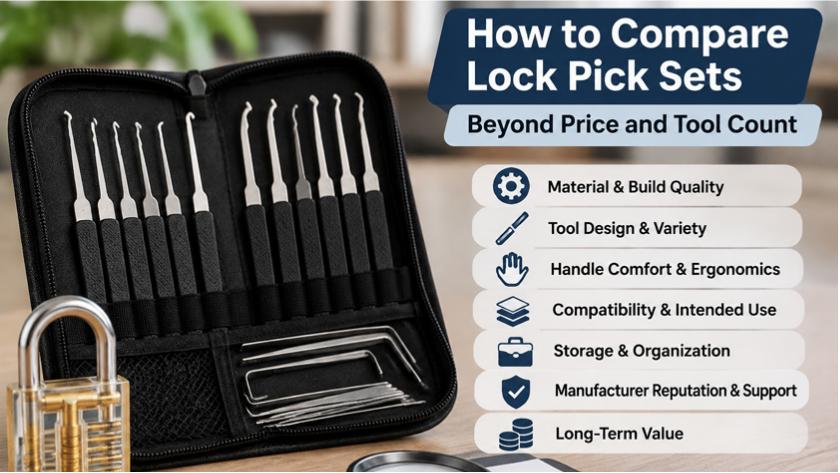
1. Evaluate Tool Material and Build Quality
Material quality is one of the most important factors when comparing lock pick sets. Tools must maintain their shape and structural integrity during normal handling and authorized practice.Common materials include:
- Stainless Steel: Offers corrosion resistance and is widely used in precision tools. Its performance depends on the specific alloy and manufacturing process.
- Spring Steel: Provides flexibility and resilience, making it suitable for tools that require controlled bending.
- Carbon Steel: Can offer good strength and durability, although it may require additional protection against corrosion.
A well-made set should feature consistent dimensions, smooth edges, and reliable construction rather than simply a high number of tools.
2. Compare Tool Design and Variety
Tool count alone does not indicate how useful a lock pick set will be. Different tool profiles are designed for different mechanical applications, and the quality of their design matters more than the quantity included.When comparing sets, consider:
- Whether the tools have consistent manufacturing dimensions.
- Whether the profiles are clearly identified.
- Whether the kit includes appropriate accessories for its intended training purpose.
- Whether the designs are suitable for the lock mechanisms covered by the manufacturer's specifications.
For beginners, a clearly organized educational kit may be easier to understand than an oversized professional collection.
3. Check Handle Comfort and Ergonomics
Handle design is another factor that buyers sometimes overlook.A tool may use high-quality materials but still be uncomfortable during extended practice if its handle is poorly designed.
Important considerations include:
- Grip Material: Handles may use metal, rubber, plastic, or textured composite materials. Each offers a different balance of comfort, durability, and maintenance requirements.
- Surface Texture: A suitable texture can improve handling and reduce slipping during ordinary use.
- Handle Shape: Ergonomic designs can make tools easier to hold and control, particularly during longer training sessions.
- Weight Distribution: Balanced construction can improve handling comfort and reduce unnecessary hand fatigue.
4. Consider Compatibility and Intended Applications
Not every lock pick set is designed for the same audience or application.Some products are intended for introductory mechanical education, while others are marketed toward professional locksmiths or experienced lock sport participants.
Before purchasing, check the manufacturer's stated compatibility and intended use.
| Intended User | What to Look For |
| Beginners | Clear labeling, basic educational materials, and organized storage |
| Lock Sport Enthusiasts | Consistent manufacturing quality and suitable practice accessories |
| Locksmith Professionals | Durable construction, reliable quality control, and manufacturer support |
| Training Institutions | Safety documentation, standardized equipment, and replaceable components |
Buyers should avoid assuming that a larger kit automatically supports more lock types.
5. Examine Storage and Organization
A good lock pick set should also make its components easy to identify, store, and maintain.Storage quality affects convenience, portability, and the long-term condition of the tools.
Consider these features:
- Individual Compartments: Help prevent tools from rubbing against one another.
- Protective Cases: Reduce exposure to dust, moisture, and accidental damage.
- Clear Labels: Make individual components easier to identify.
- Compact Design: Improves portability for professionals who transport equipment.
- Secure Fastening: Helps keep the contents organized during storage.
6. Review Manufacturer Reputation and Quality Control
Two lock pick sets with similar specifications may have significantly different manufacturing standards.A reliable manufacturer should provide clear product descriptions, accurate material information, and consistent quality control.
Before buying, consider:
- Product Documentation: Check whether specifications and intended applications are clearly explained.
- Customer Feedback: Look for repeated comments about manufacturing consistency, durability, and packaging.
- Brand Reputation: Consider the manufacturer's experience producing precision tools.
- Warranty and Support: Check whether replacement parts or after-sales assistance are available.
- Product Accuracy: Compare advertised specifications with the actual product description.
7. Compare Long-Term Value Instead of Initial Price
The cheapest lock pick set is not necessarily the most economical choice.A low-cost kit may have inconsistent construction, limited documentation, or inadequate storage. A more expensive product may provide better materials, stronger quality control, and more reliable customer support.
A useful comparison should consider the following:
| Evaluation Factor | What Matters |
| Material Quality | Strength, flexibility, and corrosion resistance |
| Manufacturing | Consistent dimensions and smooth finishing |
| Ergonomics | Comfortable handles and balanced construction |
| Compatibility | Suitability for the stated educational or professional application |
| Storage | Protective case and organized compartments |
| Support | Warranty, documentation, and replacement availability |
| Overall Value | Quality and usefulness relative to total cost |
8. Common Mistakes to Avoid When Buying Lock Pick Sets
Even experienced buyers can overlook important product details when comparing multiple options.Here are several common mistakes worth avoiding:
- Choosing the Largest Kit: More tools do not necessarily mean better quality or greater practical value.
- Ignoring Material Specifications: Attractive product images cannot confirm the actual material or durability.
- Overlooking Storage: Poor organization can make equipment difficult to maintain.
- Ignoring Intended Use: A beginner's educational kit may not meet professional requirements.
- Trusting Unverified Reviews: Look for detailed feedback rather than relying on ratings alone.
- Focusing Only on Discounts: A low price is less attractive if the product does not meet basic quality expectations.
Conclusion
Comparing lock pick sets requires more than looking at their prices and counting the tools included. Material quality, manufacturing consistency, ergonomic design, intended applications, storage, and manufacturer support all contribute to a product's overall value.For beginners, clear documentation and organized storage may be the most important considerations. Experienced users may place greater emphasis on material specifications, manufacturing precision, and long-term durability.
Whether you are purchasing your first educational kit or upgrading your professional equipment, focus on quality and suitability rather than impressive tool counts. If you are exploring different locksmith equipment options, Barhomevip provides another place to compare product specifications, available sets, and pricing before making a purchasing decision.
The best choice is ultimately the set that meets your requirements, offers dependable construction, and provides genuine value over time. If you are exploring different locksmith equipment options, Lockpickmall provides a convenient place to compare product specifications, available sets, and pricing. Whether you are upgrading your existing equipment or looking for a suitable starter kit, you can Buy Lock Pick Tools from Barhomevip and compare available options to find products that match your requirements and budget.