 Promotion: 5% Discount Code: 5vip





Lishi Lock Pick Buying Guide: Keyway Codes, Vehicle Matching & Mistakes
2026-09-15 14:01
Lishi tools are widely recognized by locksmiths for their vehicle-specific design and integrated pick-and-decoder format. However, buying the right Lishi lock pick is not simply a matter of choosing a popular model or selecting a tool for a vehicle brand. Compatibility depends on the exact keyway, lock design, vehicle application, and the job you are legally authorized to perform.
For locksmith training, fleet servicing, and work on locks you own or have explicit permission to service, a careful purchasing process helps prevent wasted money, incorrect orders, and avoidable tool damage. If you plan to buy lock pick sets or individual Lishi tools, start by confirming the lock application instead of relying on a product photo or a broad vehicle description.
| Important: Lishi tools must only be used on locks you own or are explicitly authorized to service. Always follow applicable local laws and professional licensing requirements.
For example, a listing may mention a keyway code such as SC1, KW5, CY24, HU66, or FO38. These codes identify lock families rather than serving as universal labels for every vehicle produced by a brand.
A common mistake is searching “Lishi tool for Ford” or “Lishi tool for Toyota” and buying the first result. That approach overlooks changes in keyway designs between vehicle generations. A more reliable search combines the vehicle information with the confirmed keyway code.
These examples are not a compatibility guarantee. Manufacturers can revise locks, and online listings can contain incomplete vehicle information. The best practice is to treat the keyway code as the starting point for verification, not the final answer.
Vehicle Matching Checklist
A large kit can look like better value, but it is only useful when the included codes match your actual service needs. For many buyers, a smaller collection with clearly verified applications is more practical than a broad assortment with uncertain coverage.
A vehicle badge is not a keyway code. Different models and years can use different lock systems. Always verify the exact application.
2. Ignoring Model-Year Changes
A tool that fits one production period may not fit a later revision. Read the model-year coverage in the listing and compare it against the specific vehicle.
3. Assuming Door and Ignition Locks Are Always Identical
Some vehicles may have different lock arrangements or prior repairs. Check the intended lock location stated by the product listing.
4. Treating Online Fitment Lists as Complete
Fitment lists are useful, but they can be abbreviated or outdated. Cross-check the information where possible, especially for imported, modified, or older vehicles.
5. Buying the Cheapest Listing Without Checking Details
Price matters, but product code, version, included accessories, seller reliability, and stated compatibility matter more. A low-priced tool that does not match the required application is not a bargain.
6. Forgetting Legal and Professional Requirements
Possessing and using locksmith tools may be regulated in some jurisdictions. Maintain documentation for authorized work and understand the rules that apply where you operate.
Whether you are building a focused professional collection or comparing individual models, prioritize verified compatibility, clear listing information, and lawful use. For buyers seeking cheap lock pick tools, value should mean the right verified tool for the job, not simply the lowest price.
For locksmith training, fleet servicing, and work on locks you own or have explicit permission to service, a careful purchasing process helps prevent wasted money, incorrect orders, and avoidable tool damage. If you plan to buy lock pick sets or individual Lishi tools, start by confirming the lock application instead of relying on a product photo or a broad vehicle description.
| Important: Lishi tools must only be used on locks you own or are explicitly authorized to service. Always follow applicable local laws and professional licensing requirements.
What Makes Lishi Tools Different?
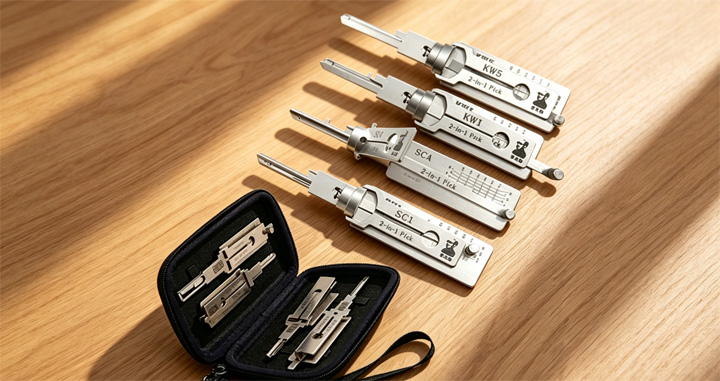
A Lishi 2-in-1 tool combines two functions into one vehicle-specific instrument:- A pick component designed around a particular lock profile
- A decoder component intended to help an authorized user read the lock’s key-cut positions
- A profile matched to a specific keyway or lock family
- A compact format suitable for professional tool organization
Why Keyway Compatibility Comes First
A keyway is the shape and profile of the entry path inside a lock. It determines whether a key, or a matching authorized-service tool, can physically align with the lock design. When buying a Lishi lock pick, the keyway code is usually more important than the vehicle brand printed on the listing.For example, a listing may mention a keyway code such as SC1, KW5, CY24, HU66, or FO38. These codes identify lock families rather than serving as universal labels for every vehicle produced by a brand.
| Buying Factor | Why It Matters | What to Check Before Ordering |
| Keyway code | Determines basic physical compatibility | Confirm the code from a reliable vehicle or lock reference |
| Vehicle make and model | Narrows possible lock families | Check the exact model, not only the brand |
| Model year | Lock systems may change across production years | Verify the year range in the product listing |
| Region or market | Keyways can differ between markets | Confirm whether the vehicle is North American, European, Asian, or another specification |
| Lock location | Door, ignition, trunk, and other locks may not always match | Read the listing’s stated application carefully |
| Product version | Tool revisions may have different coverage | Compare the exact item title, code, and seller notes |
Understanding Common Lishi Keyway Codes
Product listings often use short codes because they are more precise than general vehicle-brand labels. While individual applications must always be verified before purchase, the following examples show how these names are used in the market.| Example Tool Code | General Category | Typical Buying Consideration |
| SC1 | Residential and commercial keyway family | Confirm the exact lock format and pin configuration |
| KW5 | Residential and commercial keyway family | Do not assume every Kwikset-style lock uses the same profile |
| CY24 | Automotive lock family | Verify vehicle model, year, and regional fitment |
| HU66 | Automotive lock family | Check the exact vehicle group and tool version |
| FO38 | Automotive lock family | Confirm the intended model-year range |
| Other coded tools | Application-specific designs | Match the code to trusted lock or vehicle reference information |
How to Match a Lishi Tool to a Vehicle
A professional buying process is based on confirmed information. Before adding a Lishi tool to your cart, collect the details below from the authorized service job, owner documentation, or an established locksmith reference.Vehicle Matching Checklist
- Vehicle manufacturer
- Exact model name
- Model year
- Market or region where the vehicle was sold
- Lock application, such as door or ignition
- Confirmed keyway or key blank reference
- Any previous lock replacement or aftermarket modification
- Product listing’s stated fitment range
Choose Individual Tools or a Larger Collection?
The right purchasing approach depends on the type of work you perform. A beginner practicing on owned training locks has different needs from a licensed automotive locksmith who regularly handles authorized roadside or workshop jobs.| Buyer Type | Better Starting Option | Reason |
| Locksport learner | Practice lock and basic training tools | Focuses on controlled, permitted learning |
| New locksmith trainee | Small, verified selection for common authorized work | Reduces unnecessary purchases |
| Automotive specialist | Individual tools chosen by confirmed coverage | Supports a focused vehicle market |
| Mobile locksmith business | Organized collection built over time | Lets the business expand based on real service demand |
| General tool collector | Carefully documented individual tools | Avoids duplicate or unsupported applications |
Common Lishi Lock Pick Buying Mistakes
1. Buying by Vehicle Brand AloneA vehicle badge is not a keyway code. Different models and years can use different lock systems. Always verify the exact application.
2. Ignoring Model-Year Changes
A tool that fits one production period may not fit a later revision. Read the model-year coverage in the listing and compare it against the specific vehicle.
3. Assuming Door and Ignition Locks Are Always Identical
Some vehicles may have different lock arrangements or prior repairs. Check the intended lock location stated by the product listing.
4. Treating Online Fitment Lists as Complete
Fitment lists are useful, but they can be abbreviated or outdated. Cross-check the information where possible, especially for imported, modified, or older vehicles.
5. Buying the Cheapest Listing Without Checking Details
Price matters, but product code, version, included accessories, seller reliability, and stated compatibility matter more. A low-priced tool that does not match the required application is not a bargain.
6. Forgetting Legal and Professional Requirements
Possessing and using locksmith tools may be regulated in some jurisdictions. Maintain documentation for authorized work and understand the rules that apply where you operate.
A Smarter Buying Process
Use this simple process before purchasing a Lishi tool:- Identify the authorized job and exact lock application.
- Record the vehicle make, model, year, and market.
- Confirm the keyway code through reliable documentation or a professional reference.
- Compare that information with the listing title and fitment notes.
- Check whether the listing specifies door, ignition, or another application.
- Review seller information, product version, and included items.
- Keep purchase records and compatibility notes for future authorized jobs.
Final Thoughts
The best Lishi lock pick is not necessarily the most popular code or the largest kit. It is the tool that accurately matches a verified keyway and a legitimate, authorized service need. Taking time to confirm vehicle details, model year, region, lock location, and product code can prevent costly ordering mistakes.Whether you are building a focused professional collection or comparing individual models, prioritize verified compatibility, clear listing information, and lawful use. For buyers seeking cheap lock pick tools, value should mean the right verified tool for the job, not simply the lowest price.