 Promotion: 5% Discount Code: 5vip





Lock Pick Sizes Explained: Thickness, Profiles and How to Choose
2026-09-08 10:35
Choosing the right lock pick is not simply about finding the thinnest or most advanced-looking tool. Lock picks come in different thicknesses, profiles, and hook depths, and each design offers a different balance of stiffness, clearance, and control.
For beginners learning on practice locks, understanding these differences can make it much easier to build a practical lock pick set without buying dozens of unnecessary tools. Common thicknesses range from approximately 0.015" to 0.025", while popular profiles include short hooks, medium hooks, deep hooks, diamonds, and several types of rakes.
This guide explains the most common lock pick sizes, how different profiles compare, and what to consider when choosing tools for locksport, locksmith training, and authorized practice. If you plan to buy lock pick sets, Barhomevip offers a selection of lock picking tools with different profiles and configurations, making it easier to choose a set that matches your practice and training needs.
| Note: Lock picking tools should only be used on locks you own or have explicit permission to work on. Local laws regarding the possession and use of locksmith tools may vary.
The most important include:
Not every manufacturer offers every profile in every thickness, so these measurements should be treated as common categories rather than universal standards.
Its biggest advantage is rigidity. Compared with thinner picks, a 0.025" tool generally flexes less and can feel easier to control during basic training.
That is why this thickness frequently appears in beginner-oriented lock pick sets.
Advantages include:
For general practice, however, 0.025" remains one of the most useful starting sizes.
A 0.020-inch lock pick offers a useful balance between stiffness and clearance.
It takes up less space than a 0.025" pick while remaining more rigid than very thin 0.015" alternatives. This makes 0.020" a popular second thickness for people expanding beyond their first basic set.
Its main advantages are:
This makes it easier to choose a tool according to available keyway space without changing to a completely different tip shape.
Their biggest advantage is additional clearance. Because the shaft occupies less space, a thin pick can offer greater freedom of movement in restrictive keyways.
However, thinner does not automatically mean better.
Thin tools generally flex more and may feel less forgiving to beginners. They can also require more careful handling than thicker alternatives.
Their characteristics include:
The goal is not to use the thinnest pick possible. It is to choose a thickness that provides enough working space while retaining comfortable stiffness and control.
Common profiles include:
Beginners do not need every profile immediately. A few carefully selected tools are usually more useful than a large collection of similar designs.
Its low working profile makes it relatively versatile and provides a good foundation for learning individual pin manipulation on authorized training locks.
A beginner collection could therefore start with:
This approach also allows beginners to compare two thicknesses while keeping the tip profile familiar.
A deep or steep hook extends farther upward and can provide additional reach when the keyway offers enough space.
A simple progression is:
Short Hook → Medium Hook → Deep Hook
However, deeper does not mean better. Taller hooks require more room to move.
The appropriate hook depth therefore depends on the available space and training situation rather than the user's experience level alone.
Hybrid designs combine characteristics of several shapes and can provide additional variety.
These profiles can be useful additions to an established collection, but beginners generally benefit more from learning with a small selection of core hooks before purchasing many specialty shapes.
Common rake designs include:
For a beginner set, one or two rake profiles are usually enough to provide variety. There is little need to purchase every available rake before understanding how the basic profiles differ.
As experience grows, thinner picks, deep hooks, diamonds, hybrids, and additional rake profiles can be added according to actual training needs.
For most beginners, 0.025-inch picks provide a strong starting point, while 0.020-inch picks offer additional clearance without becoming extremely thin. Picks around 0.018" or 0.015" can be useful when restrictive practice keyways require more working room, but thinner tools are not automatically better.
Profile selection should be equally practical. Start with a short hook and medium hook, add one or two rake designs, and expand into deeper hooks, diamonds, hybrids, or thinner versions as your training needs develop.
Rather than choosing a lock pick set based on the number of tools included, focus on whether it provides useful profiles in appropriate thicknesses. A smaller, balanced collection is often a better foundation for legal locksport and locksmith training than a large set filled with redundant designs. If you are looking for cheap lock pick tools to expand your training kit, Barhomevip offers different lock pick sets and individual tools for beginners and experienced users to compare based on their needs.
For beginners learning on practice locks, understanding these differences can make it much easier to build a practical lock pick set without buying dozens of unnecessary tools. Common thicknesses range from approximately 0.015" to 0.025", while popular profiles include short hooks, medium hooks, deep hooks, diamonds, and several types of rakes.
This guide explains the most common lock pick sizes, how different profiles compare, and what to consider when choosing tools for locksport, locksmith training, and authorized practice. If you plan to buy lock pick sets, Barhomevip offers a selection of lock picking tools with different profiles and configurations, making it easier to choose a set that matches your practice and training needs.
| Note: Lock picking tools should only be used on locks you own or have explicit permission to work on. Local laws regarding the possession and use of locksmith tools may vary.
What Does Lock Pick Size Mean?
"Lock pick size" can refer to several characteristics rather than a single measurement.The most important include:
- Thickness: The thickness of the metal used to make the pick.
- Profile: The shape of the working tip, such as a hook, diamond, or rake.
- Reach: How high the working tip extends.
- Width: The width of the shaft and tip.
- Handle: The size and construction of the section held by the user.
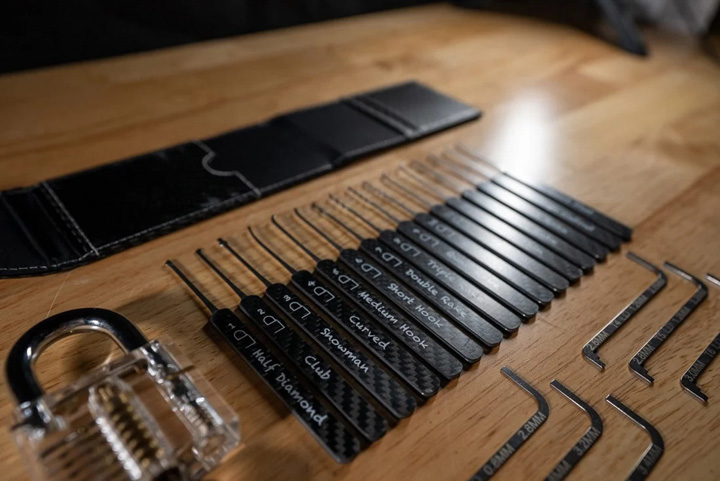
Common Lock Pick Thicknesses
Lock pick thickness is commonly measured in thousandths of an inch. Even a difference of 0.005" can noticeably change how a tool feels.| Thickness | Approx. Metric | Characteristics | Best Consideration |
| 0.025" | 0.64 mm | Thick, stiff, durable | General training and beginners |
| 0.023" | 0.58 mm | Slightly thinner | Balanced general use |
| 0.020" | 0.51 mm | Medium-thin | More keyway clearance |
| 0.018" | 0.46 mm | Thin and flexible | Restrictive practice keyways |
| 0.015" | 0.38 mm | Very thin | Situations requiring extra clearance |
0.025-Inch Lock Picks: A Good Starting Point
The 0.025-inch lock pick is a common general-purpose option and a practical starting thickness for beginners.Its biggest advantage is rigidity. Compared with thinner picks, a 0.025" tool generally flexes less and can feel easier to control during basic training.
That is why this thickness frequently appears in beginner-oriented lock pick sets.
Advantages include:
- Good stiffness
- Easier control for beginners
- Widely available
- Suitable for many practice locks
- Available in many hook and rake profiles
For general practice, however, 0.025" remains one of the most useful starting sizes.
0.020-Inch Lock Picks: A Versatile Middle Ground
A 0.020-inch lock pick offers a useful balance between stiffness and clearance.It takes up less space than a 0.025" pick while remaining more rigid than very thin 0.015" alternatives. This makes 0.020" a popular second thickness for people expanding beyond their first basic set.
Its main advantages are:
- More working room than 0.025"
- Good balance between rigidity and flexibility
- Suitable for narrower practice keyways
- Available in many common profiles
- Useful as an alternative to standard-thickness hooks
This makes it easier to choose a tool according to available keyway space without changing to a completely different tip shape.
0.018 and 0.015-Inch Lock Picks
At the thinner end are 0.018" and 0.015" picks.Their biggest advantage is additional clearance. Because the shaft occupies less space, a thin pick can offer greater freedom of movement in restrictive keyways.
However, thinner does not automatically mean better.
Thin tools generally flex more and may feel less forgiving to beginners. They can also require more careful handling than thicker alternatives.
Their characteristics include:
- More room in narrow keyways
- Greater flexibility
- Less material occupying the working area
- Useful when standard picks feel too large
- More careful handling may be required
Thick vs Thin Lock Picks
The basic difference can be summarized as a trade-off between stiffness and clearance.Thicker Lock Picks
Thicker picks generally provide:- Greater rigidity
- Less flex
- Easier control
- A more substantial feel
- Good suitability for general practice
Thinner Lock Picks
Thinner picks generally provide:- More keyway clearance
- Greater freedom of movement
- Better access in restrictive spaces
- More flexibility
- Additional options when thicker picks feel crowded
The goal is not to use the thinnest pick possible. It is to choose a thickness that provides enough working space while retaining comfortable stiffness and control.
Lock Pick Profiles Explained
Thickness determines how much space a tool occupies, while the profile determines the shape of its working end.Common profiles include:
| Profile | General Shape | Typical Training Purpose |
| Short Hook | Low curved hook | General pin manipulation practice |
| Medium Hook | Moderate curved hook | Additional reach |
| Deep Hook | Taller hook | Greater reach where space allows |
| Half Diamond | Angled tip | Versatile traditional profile |
| City Rake | Stepped edge | Raking practice |
| Wave/Snake Rake | Multiple curves | General raking practice |
| Triple/Quad Rake | Multiple peaks | Alternative raking profile |
| Offset Hybrid | Curved hybrid tip | Broader training variety |
Short Hook: The Essential Beginner Profile
The short hook is one of the most important profiles in a basic lock pick set.Its low working profile makes it relatively versatile and provides a good foundation for learning individual pin manipulation on authorized training locks.
A beginner collection could therefore start with:
- Short Hook 0.025"
- Medium Hook 0.025"
- Short Hook 0.020"
This approach also allows beginners to compare two thicknesses while keeping the tip profile familiar.
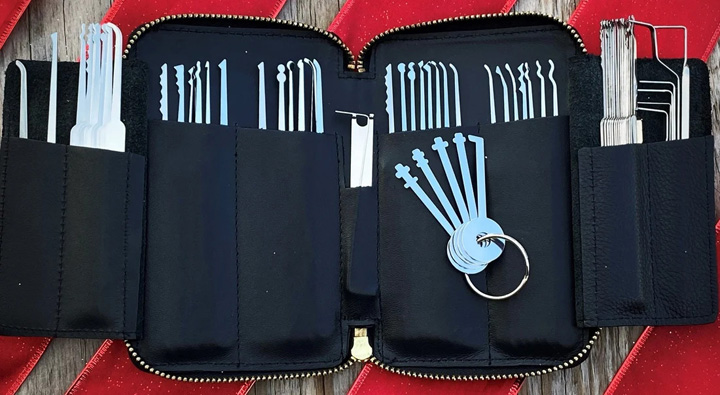
Medium and Deep Hooks
A medium hook provides more reach than a short hook without becoming excessively tall. It is a logical second hook for most training sets.A deep or steep hook extends farther upward and can provide additional reach when the keyway offers enough space.
A simple progression is:
Short Hook → Medium Hook → Deep Hook
However, deeper does not mean better. Taller hooks require more room to move.
The appropriate hook depth therefore depends on the available space and training situation rather than the user's experience level alone.
Diamonds and Hybrid Profiles
The half diamond is another traditional lock pick profile. Instead of the rounded curve of a hook, it uses an angled working tip.Hybrid designs combine characteristics of several shapes and can provide additional variety.
These profiles can be useful additions to an established collection, but beginners generally benefit more from learning with a small selection of core hooks before purchasing many specialty shapes.
Rake Profiles
Rakes use multiple peaks, valleys, or waves rather than a single hook-shaped tip.Common rake designs include:
- City rake
- Snake rake
- Wave rake
- Triple peak
- Quad rake
- Quint rake
- Worm rake
For a beginner set, one or two rake profiles are usually enough to provide variety. There is little need to purchase every available rake before understanding how the basic profiles differ.
How to Choose the Right Lock Pick Size
Instead of buying the largest set available, beginners can build a more practical collection by following a few simple principles.1. Start With 0.025"
A standard 0.025" pick provides useful stiffness and is suitable for many general training situations.2. Add 0.020" When Needed
If a standard pick feels crowded in certain practice keyways, a 0.020" version can provide additional clearance.3. Prioritize Basic Hooks
A short hook and medium hook are more useful starting tools than a large number of highly specialized profiles.4. Add One or Two Rakes
A common wave or city-style rake provides additional training variety without unnecessarily increasing the size of the set.5. Don't Choose Thin Picks Just Because They Are Thin
A 0.015" pick is not automatically superior to a 0.025" pick. Use thinner tools when their additional clearance provides a genuine advantage.6. Remember Turning Tools
A useful lock pick kit also requires suitable turning tools. Different widths and styles can help accommodate different training keyways, so they should be considered alongside pick thickness and profile.Recommended Beginner Lock Pick Selection
A beginner does not need a huge collection. A compact training set could look like this:| Tool | Suggested Thickness | Purpose |
| Short Hook | 0.025" | Main general-purpose training profile |
| Medium Hook | 0.025" | Provides additional reach |
| Short Hook | 0.020" | Thinner alternative |
| Wave Rake | 0.025" or 0.020" | Adds a common rake profile |
| Second Rake | 0.025" or 0.020" | Provides additional variety |
| Turning Tools | Multiple sizes | Accommodates different practice keyways |
Final Thoughts
Choosing the right lock pick size comes down to understanding the balance between thickness, stiffness, clearance, profile, and reach.For most beginners, 0.025-inch picks provide a strong starting point, while 0.020-inch picks offer additional clearance without becoming extremely thin. Picks around 0.018" or 0.015" can be useful when restrictive practice keyways require more working room, but thinner tools are not automatically better.
Profile selection should be equally practical. Start with a short hook and medium hook, add one or two rake designs, and expand into deeper hooks, diamonds, hybrids, or thinner versions as your training needs develop.
Rather than choosing a lock pick set based on the number of tools included, focus on whether it provides useful profiles in appropriate thicknesses. A smaller, balanced collection is often a better foundation for legal locksport and locksmith training than a large set filled with redundant designs. If you are looking for cheap lock pick tools to expand your training kit, Barhomevip offers different lock pick sets and individual tools for beginners and experienced users to compare based on their needs.