 Promotion: 5% Discount Code: 5vip





Practice Lock Types Explained: Clear, Cutaway and Repinnable Locks
2026-10-13 11:46
Learning lock picking requires more than a basic set of tools. The type of practice lock you choose can significantly influence how well you understand lock mechanisms, recognize internal components, and develop practical skills. Clear, cutaway, and repinnable practice locks are three popular options for beginners, hobbyists, and locksmith trainees.
Each type offers a different learning experience. Clear locks emphasize visibility, cutaway locks provide a closer look at mechanical components, and repinnable locks offer adjustable training challenges. Understanding these differences can help you select the right equipment for your experience level, training goals, and budget. If you're looking to Buy Practice Locks, barhomevip offers a selection of training locks designed for different learning needs and experience levels.
These training tools are commonly used in locksmith education, locksport activities, and mechanical demonstrations. They allow learners to observe components such as pins, springs, plugs, and cylinders in a controlled environment.
Practice locks offer several advantages:
These categories can overlap. For example, some cutaway locks are also repinnable, allowing users to combine visual observation with adjustable training.
This visual feedback is especially useful for individuals who have never examined the inside of a lock.
Acrylic housings may wear or crack over time, and some inexpensive models provide mechanical feedback that differs from standard metal cylinders. Their internal configurations may also be relatively simple.
Best for: Complete beginners, classroom demonstrations, and anyone interested in understanding basic lock construction.
Instead of making the entire housing transparent, manufacturers create viewing windows that reveal important mechanical parts.
Depending on the model, users can observe pin chambers, springs, and cylinder components while examining how the mechanism responds to normal key operation.
Their metal construction can also make them suitable for repeated educational demonstrations.
Additionally, removing part of the housing can change the behavior of the mechanism, so even a cutaway lock may not perfectly reproduce the feel of an intact cylinder.
Best for: Learners who understand basic lock components and want to study more realistic mechanical designs.
They are particularly valuable for learners who want a reusable training device rather than purchasing multiple fixed-configuration locks.
Depending on the product, users may be able to adjust the number of active pin chambers, replace compatible pins, or explore different mechanical configurations.
Some models include additional pins, springs, keys, or storage trays. Others require a separate pinning kit.
They may also require additional knowledge of cylinder components and careful handling of small parts. Buyers should verify compatibility before purchasing replacement pins or accessories.
Best for: Intermediate learners, locksmith trainees, and enthusiasts seeking customizable practice equipment.
For beginners, visibility is usually more important than complexity. A clear practice lock provides an accessible introduction to internal lock mechanisms.
Once you understand basic cylinder construction, a cutaway model can provide a more detailed view of metal components.
Repinnable locks become particularly useful when you want to explore different configurations and practice maintaining training cylinders.
One common mistake is assuming that transparent locks provide the same mechanical experience as conventional metal cylinders. Although useful for visualization, many clear locks are simplified educational models.
Another mistake is purchasing a complicated repinnable system before understanding basic lock components. Adjustable equipment offers flexibility, but beginners may not immediately benefit from every feature.
Other mistakes include:
Store practice locks in a clean, dry environment to reduce dust accumulation and corrosion. Transparent acrylic models should be protected from heavy impacts, excessive heat, and harsh cleaning chemicals.
For metal training cylinders, follow the manufacturer's recommendations regarding cleaning and lubrication. Avoid excessive lubricant, which may attract debris or interfere with normal operation.
Repinnable models require additional care because their small internal components can be easily misplaced. Keeping compatible pins and springs organized in labeled containers can simplify maintenance.
Use practice locks only on equipment you own or are explicitly authorized to work with.
Yes. Their transparent construction helps beginners identify internal components and understand basic lock operation. However, their mechanical characteristics may differ from conventional metal locks.
Are cutaway locks better than clear locks?
Neither is universally better. Clear locks prioritize visibility and accessibility, while cutaway locks often provide a more realistic metal-cylinder structure. The better choice depends on your learning goals.
Can every cutaway lock be repinned?
No. Some cutaway locks have fixed configurations, while others support servicing or repinning. Always check the manufacturer's specifications.
Do repinnable locks require additional accessories?
Some packages include compatible pins, springs, and maintenance accessories. Others contain only the cylinder, so additional equipment may be necessary.
Which practice lock offers the best long-term value?
A quality repinnable lock can offer excellent long-term value because its internal configuration can be changed. However, clear or cutaway locks may be more economical for basic mechanical education.
For complete beginners, a transparent practice lock is often the most accessible starting point. Learners seeking a closer look at conventional cylinder construction may prefer a cutaway model, while those interested in adjustable configurations can benefit from a repinnable lock.
Ultimately, choosing the right practice lock means balancing visibility, durability, customization, and cost. Investing in suitable training equipment can make locksmith education more structured, engaging, and productive. For learners looking for Cheap Practice Locks, barhomevip is a convenient place to explore affordable training options and compare products that match different skill levels and budgets.
Each type offers a different learning experience. Clear locks emphasize visibility, cutaway locks provide a closer look at mechanical components, and repinnable locks offer adjustable training challenges. Understanding these differences can help you select the right equipment for your experience level, training goals, and budget. If you're looking to Buy Practice Locks, barhomevip offers a selection of training locks designed for different learning needs and experience levels.
What Is a Practice Lock?
A practice lock is a training device designed to help users understand how locking mechanisms function. Unlike ordinary security locks, practice locks often feature transparent housings, exposed components, or adjustable internal configurations.These training tools are commonly used in locksmith education, locksport activities, and mechanical demonstrations. They allow learners to observe components such as pins, springs, plugs, and cylinders in a controlled environment.
Practice locks offer several advantages:
- Visual learning: Understand how internal components interact.
- Skill development: Build familiarity with lock mechanisms through repeated practice.
- Controlled training: Learn using equipment specifically intended for educational purposes.
- Progressive difficulty: Move from simple mechanisms to more challenging configurations.
- Reusable equipment: Certain models support repeated assembly and adjustment.
Three Main Types of Practice Locks Compared
Clear, cutaway, and repinnable locks are designed for different educational purposes.| Feature | Clear Practice Lock | Cutaway Practice Lock | Repinnable Practice Lock |
| Main design | Transparent housing | Exposed internal sections | Adjustable pin configuration |
| Internal visibility | High | High in exposed areas | Depends on model |
| Typical material | Acrylic or transparent plastic | Metal or mixed materials | Usually metal |
| Primary purpose | Understanding basic mechanisms | Studying mechanical interaction | Progressive skill development |
| Difficulty level | Beginner | Beginner to intermediate | Beginner to advanced |
| Customization | Usually limited | Varies by model | High |
| Durability | Moderate | Generally good | Generally good |
| Best suited for | First-time learners | Visual and mechanical learners | Long-term practice |
1. Clear Practice Locks: Best for Understanding the Basics
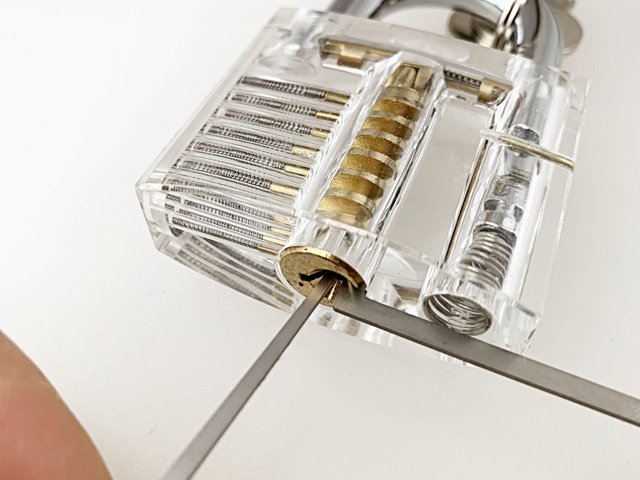
Clear practice locks are among the most recognizable training tools. They typically feature transparent acrylic housings that allow users to observe the internal mechanism without disassembling the lock.How Clear Practice Locks Work
A typical clear pin-tumbler practice lock contains a plug, key pins, driver pins, springs, and a surrounding housing. The transparent material makes these components visible, helping learners understand their arrangement and movement.This visual feedback is especially useful for individuals who have never examined the inside of a lock.
Advantages of Clear Practice Locks
- Easy to understand without extensive technical knowledge.
- Internal components remain visible during demonstrations.
- Often affordable compared with specialized training cylinders.
- Lightweight and convenient for classroom use.
- Suitable for learning basic lock terminology.
Limitations
Clear locks are primarily educational models rather than realistic representations of everyday security locks.Acrylic housings may wear or crack over time, and some inexpensive models provide mechanical feedback that differs from standard metal cylinders. Their internal configurations may also be relatively simple.
Best for: Complete beginners, classroom demonstrations, and anyone interested in understanding basic lock construction.
2. Cutaway Practice Locks: A Closer Look at Real Mechanisms
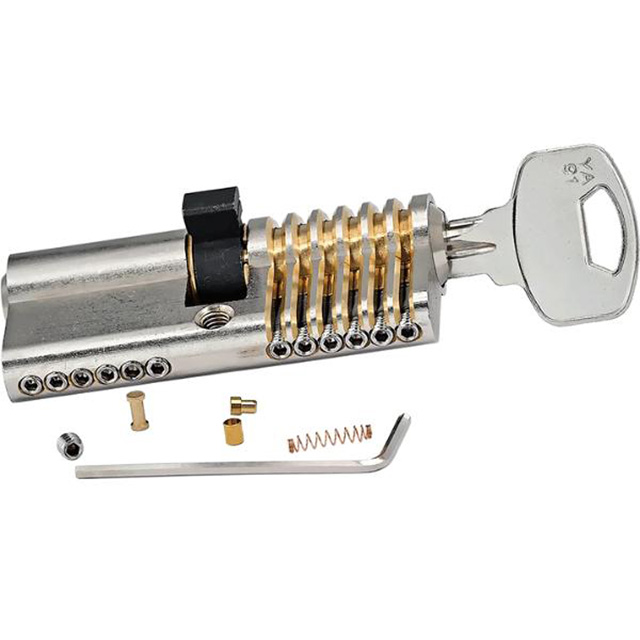
Cutaway practice locks feature openings or removed sections that expose selected internal components. Many models use metal cylinders similar in construction to conventional locks.Instead of making the entire housing transparent, manufacturers create viewing windows that reveal important mechanical parts.
Why Choose a Cutaway Lock?
Cutaway locks combine visibility with a more realistic mechanical structure.Depending on the model, users can observe pin chambers, springs, and cylinder components while examining how the mechanism responds to normal key operation.
Their metal construction can also make them suitable for repeated educational demonstrations.
Key Advantages
- Exposed components provide direct mechanical visibility.
- Metal construction often offers better durability than acrylic.
- Useful for understanding conventional cylinder designs.
- Suitable for locksmith education and technical demonstrations.
- Some models support pin replacement or reconfiguration.
Potential Drawbacks
Cutaway locks are often more expensive than basic transparent models. The exposed sections may also collect dust or debris if the lock is stored improperly.Additionally, removing part of the housing can change the behavior of the mechanism, so even a cutaway lock may not perfectly reproduce the feel of an intact cylinder.
Best for: Learners who understand basic lock components and want to study more realistic mechanical designs.
3. Repinnable Practice Locks: Flexible Training for Long-Term Progress
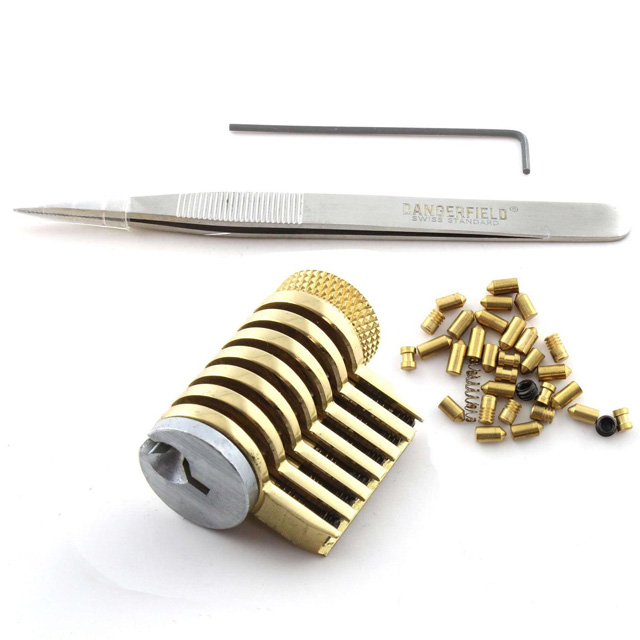
Repinnable practice locks are designed to allow changes to their internal pin configurations. Unlike fixed training locks, these models can be adjusted to provide different learning experiences.They are particularly valuable for learners who want a reusable training device rather than purchasing multiple fixed-configuration locks.
What Makes Repinnable Locks Different?
A repinnable lock generally features a cylinder designed for servicing or changing its internal components.Depending on the product, users may be able to adjust the number of active pin chambers, replace compatible pins, or explore different mechanical configurations.
Some models include additional pins, springs, keys, or storage trays. Others require a separate pinning kit.
Main Advantages
- Adjustable configurations support progressive learning.
- One training lock can provide multiple educational setups.
- Metal models are often durable and reusable.
- Useful for studying cylinder assembly and maintenance.
- Suitable for longer-term locksmith training.
Important Considerations
Repinnable locks generally cost more than basic clear locks, especially when accessories are included.They may also require additional knowledge of cylinder components and careful handling of small parts. Buyers should verify compatibility before purchasing replacement pins or accessories.
Best for: Intermediate learners, locksmith trainees, and enthusiasts seeking customizable practice equipment.
How to Choose the Right Practice Lock
The ideal choice depends on your current knowledge, preferred learning style, and intended training duration.
Consider Your Experience Level
For beginners, visibility is usually more important than complexity. A clear practice lock provides an accessible introduction to internal lock mechanisms.Once you understand basic cylinder construction, a cutaway model can provide a more detailed view of metal components.
Repinnable locks become particularly useful when you want to explore different configurations and practice maintaining training cylinders.
Evaluate Build Quality
Before purchasing, examine the following features:- Housing material: Acrylic offers visibility, while metal generally provides greater durability.
- Component quality: Well-manufactured pins and springs contribute to consistent operation.
- Cylinder construction: Check whether the design resembles the mechanisms you want to study.
- Replacement parts: Confirm whether compatible components are available.
- Included accessories: Some packages contain keys, spare pins, or maintenance tools.
- Product documentation: Clear specifications and instructions improve the learning experience.
Common Mistakes When Buying Practice Locks
Choosing the wrong training equipment can make learning unnecessarily frustrating.One common mistake is assuming that transparent locks provide the same mechanical experience as conventional metal cylinders. Although useful for visualization, many clear locks are simplified educational models.
Another mistake is purchasing a complicated repinnable system before understanding basic lock components. Adjustable equipment offers flexibility, but beginners may not immediately benefit from every feature.
Other mistakes include:
- Ignoring material quality and durability.
- Purchasing replacement components without checking compatibility.
- Assuming every cutaway lock supports repinning.
- Overlooking included accessories and storage requirements.
- Selecting equipment based entirely on price.
- Failing to distinguish educational models from security-rated locks.
How to Maintain Your Practice Locks
Proper maintenance helps preserve consistent mechanical operation and extends the usable life of training equipment.Store practice locks in a clean, dry environment to reduce dust accumulation and corrosion. Transparent acrylic models should be protected from heavy impacts, excessive heat, and harsh cleaning chemicals.
For metal training cylinders, follow the manufacturer's recommendations regarding cleaning and lubrication. Avoid excessive lubricant, which may attract debris or interfere with normal operation.
Repinnable models require additional care because their small internal components can be easily misplaced. Keeping compatible pins and springs organized in labeled containers can simplify maintenance.
Use practice locks only on equipment you own or are explicitly authorized to work with.
Frequently Asked Questions About Practice Locks
Are clear practice locks suitable for complete beginners?Yes. Their transparent construction helps beginners identify internal components and understand basic lock operation. However, their mechanical characteristics may differ from conventional metal locks.
Are cutaway locks better than clear locks?
Neither is universally better. Clear locks prioritize visibility and accessibility, while cutaway locks often provide a more realistic metal-cylinder structure. The better choice depends on your learning goals.
Can every cutaway lock be repinned?
No. Some cutaway locks have fixed configurations, while others support servicing or repinning. Always check the manufacturer's specifications.
Do repinnable locks require additional accessories?
Some packages include compatible pins, springs, and maintenance accessories. Others contain only the cylinder, so additional equipment may be necessary.
Which practice lock offers the best long-term value?
A quality repinnable lock can offer excellent long-term value because its internal configuration can be changed. However, clear or cutaway locks may be more economical for basic mechanical education.
Final Thoughts
Clear, cutaway, and repinnable practice locks each serve a distinct purpose. Clear locks simplify visual learning, cutaway locks reveal mechanical details, and repinnable locks provide flexibility for continued training.For complete beginners, a transparent practice lock is often the most accessible starting point. Learners seeking a closer look at conventional cylinder construction may prefer a cutaway model, while those interested in adjustable configurations can benefit from a repinnable lock.
Ultimately, choosing the right practice lock means balancing visibility, durability, customization, and cost. Investing in suitable training equipment can make locksmith education more structured, engaging, and productive. For learners looking for Cheap Practice Locks, barhomevip is a convenient place to explore affordable training options and compare products that match different skill levels and budgets.