 Promotion: 5% Discount Code: 5vip





What Are the Pros and Cons of Practice Locks for Beginners
2025-10-30 10:21
Learning how lock mechanisms work can be challenging without the right training tools. For beginners, jumping straight into real locks often leads to confusion and frustration due to limited visibility and feedback.
Practice locks offer a more controlled way to understand internal components and develop technique step by step. However, while they are useful for building foundational skills, they also have certain limitations that should be considered before relying on them completely.
Advantages of Practice Locks
One of the primary benefits of practice locks is safety. Unlike real locks, practice locks are designed specifically for training purposes. Many feature transparent or cutaway designs, allowing you to see the pins inside the lock and understand how each mechanism works. This visibility is invaluable for beginners, as it provides a clear understanding of lock mechanics and pin movement. Learning in a controlled environment helps reduce frustration and builds confidence before transitioning to more advanced, real-world locks.
Another key advantage is adaptability. Practice locks often come with adjustable difficulty levels, ranging from single-pin locks for absolute beginners to multi-pin locks for advanced users. This allows you to progress gradually, mastering basic techniques before tackling more challenging locks. Some models also allow you to rearrange or reset pins, which keeps the lock endlessly reusable and provides variety during training sessions.
Practice locks also promote skill development without legal or ethical concerns. In many regions, owning lockpicking tools can be legally sensitive if used improperly. By practicing on a dedicated training lock, you can improve your dexterity, hand-eye coordination, and problem-solving abilities without any legal risk. Additionally, the repetitive nature of training on practice locks helps reinforce fine motor skills and muscle memory, which are crucial for successful lockpicking.
Disadvantages of Practice Locks
Despite their benefits, practice locks have limitations that should be acknowledged. One significant drawback is that they do not always replicate the exact feel of real locks. Transparent or plastic components can feel different under tension, and pins may move more smoothly than in actual locks. As a result, skills developed on a practice lock may not immediately translate to real-world locks, especially high-security models with tighter tolerances.
Another downside is cost. While entry-level practice locks are relatively affordable, high-quality adjustable or multi-pin models can become expensive. For those just starting, investing in several practice locks to simulate different scenarios may not be financially feasible. Additionally, the need for extra tools, such as tension wrenches and pick sets, adds to the overall investment.
For those looking to start their lockpicking journey, you can conveniently buy practice locks at barhomevip.com, making it easy to get the right training tools delivered directly to your home.
Finally, practice locks can sometimes give a false sense of accomplishment. Since these locks are designed for learning, they may be easier to pick than real-world locks. Beginners may feel confident after mastering practice locks, only to encounter frustration when moving on to standard locks. It's important to view practice locks as a stepping stone rather than a substitute for real-world experience.
Conclusion
Practice locks play an important role in developing foundational skills, but they are most effective when used as part of a broader learning approach. By combining structured practice with real-world experience and maintaining realistic expectations, learners can build both confidence and practical ability more effectively over time.
Practice locks offer a more controlled way to understand internal components and develop technique step by step. However, while they are useful for building foundational skills, they also have certain limitations that should be considered before relying on them completely.
Advantages of Practice Locks
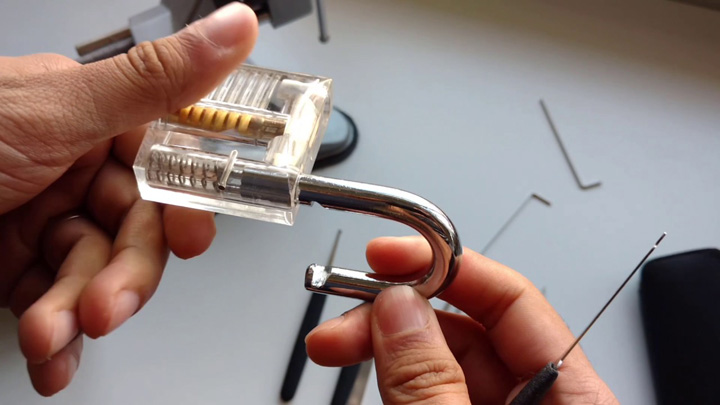
One of the primary benefits of practice locks is safety. Unlike real locks, practice locks are designed specifically for training purposes. Many feature transparent or cutaway designs, allowing you to see the pins inside the lock and understand how each mechanism works. This visibility is invaluable for beginners, as it provides a clear understanding of lock mechanics and pin movement. Learning in a controlled environment helps reduce frustration and builds confidence before transitioning to more advanced, real-world locks.
Another key advantage is adaptability. Practice locks often come with adjustable difficulty levels, ranging from single-pin locks for absolute beginners to multi-pin locks for advanced users. This allows you to progress gradually, mastering basic techniques before tackling more challenging locks. Some models also allow you to rearrange or reset pins, which keeps the lock endlessly reusable and provides variety during training sessions.
Practice locks also promote skill development without legal or ethical concerns. In many regions, owning lockpicking tools can be legally sensitive if used improperly. By practicing on a dedicated training lock, you can improve your dexterity, hand-eye coordination, and problem-solving abilities without any legal risk. Additionally, the repetitive nature of training on practice locks helps reinforce fine motor skills and muscle memory, which are crucial for successful lockpicking.
Disadvantages of Practice Locks
Despite their benefits, practice locks have limitations that should be acknowledged. One significant drawback is that they do not always replicate the exact feel of real locks. Transparent or plastic components can feel different under tension, and pins may move more smoothly than in actual locks. As a result, skills developed on a practice lock may not immediately translate to real-world locks, especially high-security models with tighter tolerances.
Another downside is cost. While entry-level practice locks are relatively affordable, high-quality adjustable or multi-pin models can become expensive. For those just starting, investing in several practice locks to simulate different scenarios may not be financially feasible. Additionally, the need for extra tools, such as tension wrenches and pick sets, adds to the overall investment.
For those looking to start their lockpicking journey, you can conveniently buy practice locks at barhomevip.com, making it easy to get the right training tools delivered directly to your home.
Finally, practice locks can sometimes give a false sense of accomplishment. Since these locks are designed for learning, they may be easier to pick than real-world locks. Beginners may feel confident after mastering practice locks, only to encounter frustration when moving on to standard locks. It's important to view practice locks as a stepping stone rather than a substitute for real-world experience.
Conclusion
Practice locks play an important role in developing foundational skills, but they are most effective when used as part of a broader learning approach. By combining structured practice with real-world experience and maintaining realistic expectations, learners can build both confidence and practical ability more effectively over time.